If you’re starting with homeschooling or looking to refresh your first-grade routine, you’re in the right place. I’m sharing the daily schedule that works for my child, a simple, flexible rhythm built around learning, play, and breathing room. Every family is different, so take this as encouragement and inspiration rather than a prescription. Use what resonates, leave what doesn’t, and build a first-grade homeschool schedule that truly works for you and your child.
This site may contain affiliate links; view the disclosure for more information.
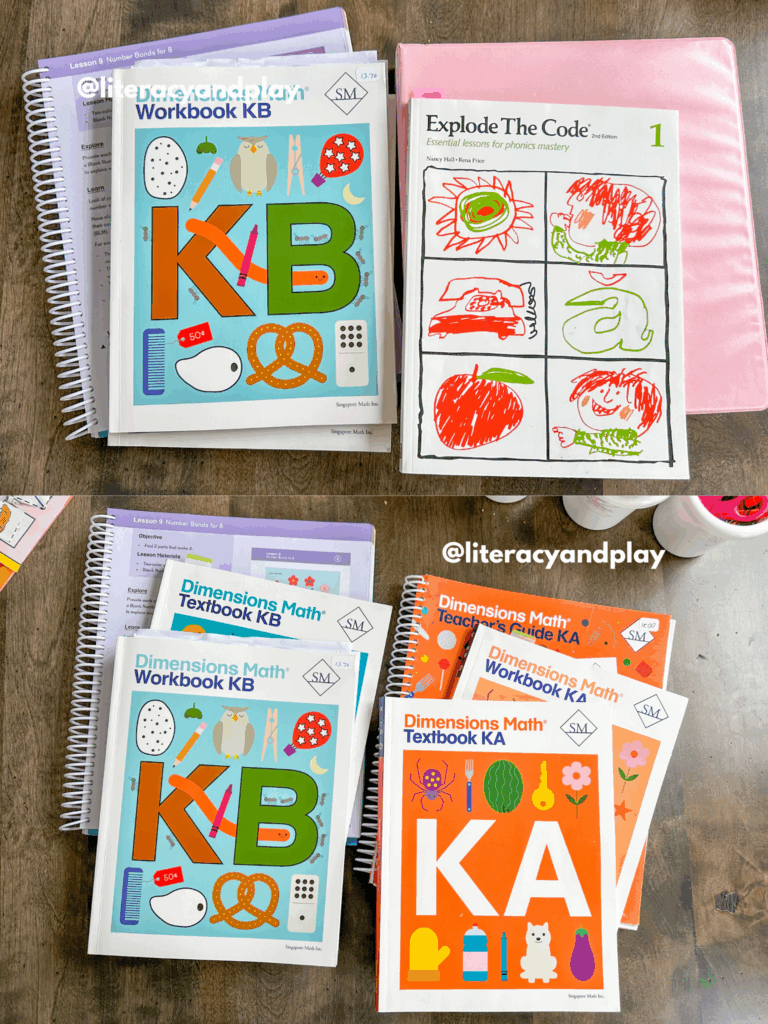
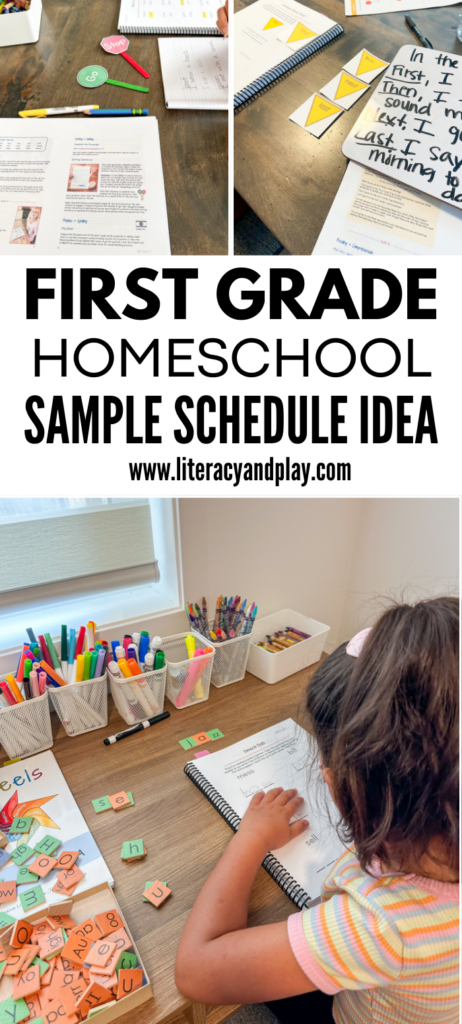
When it comes to sit-down bookwork, I aim for about one to two hours of focused time on our core subjects, language arts and math. I find the core subjects the most important in first grade. From there, we move into about an hour of electives like science and geography, which tend to be more hands-on, books, videos, and conversational. In the end, we’re looking at roughly two to three hours of structured learning, which sounds like a lot when broken into short blocks.
For our family, the more I have grown into my role as my children’s teacher, the clearer our goal has become, and it has never been to replicate a traditional school day at home.
This blog post is all about a First Grade Homeschool Schedule.
How I Structure Our Homeschool Day
One small scheduling tweak has made a surprisingly big difference in our day. I always start with my child’s least favorite core subject first and save their favorite for second. It sounds counterintuitive, but getting the harder, less exciting work out of the way early when their energy and focus are at their peak means we’re not fighting resistance mid-morning. By the time we get to their favorite subject, they have something to look forward to, and the momentum from finishing the tough stuff first carries them right through it.
I definitely suggest taking some time to figure out your child’s favorite core subject and their least favorite. Once you know their preferences, you can structure your day intentionally and turn what could be a battle of wills into a routine they actually cooperate with and maybe even look forward to.
Morning (Core Subjects):
- 1st Subject: Math
- 2nd Subject: Language Arts
Afternoon (Extra Subjects):
- Science
- Geography
- Art
- Read Aloud
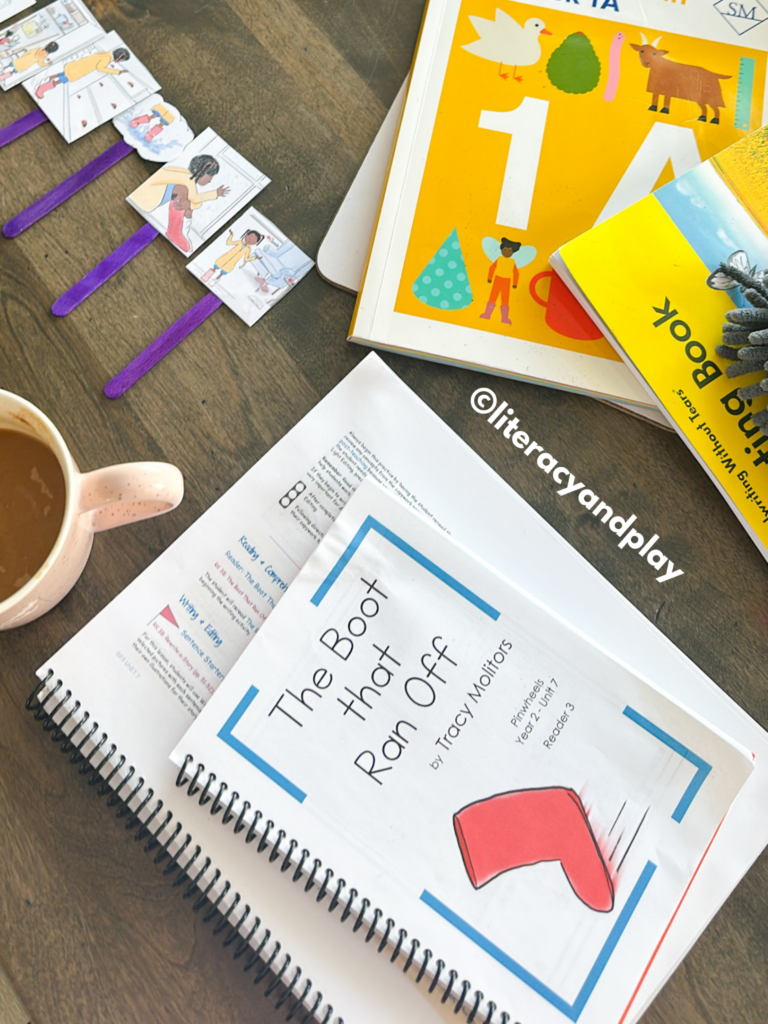
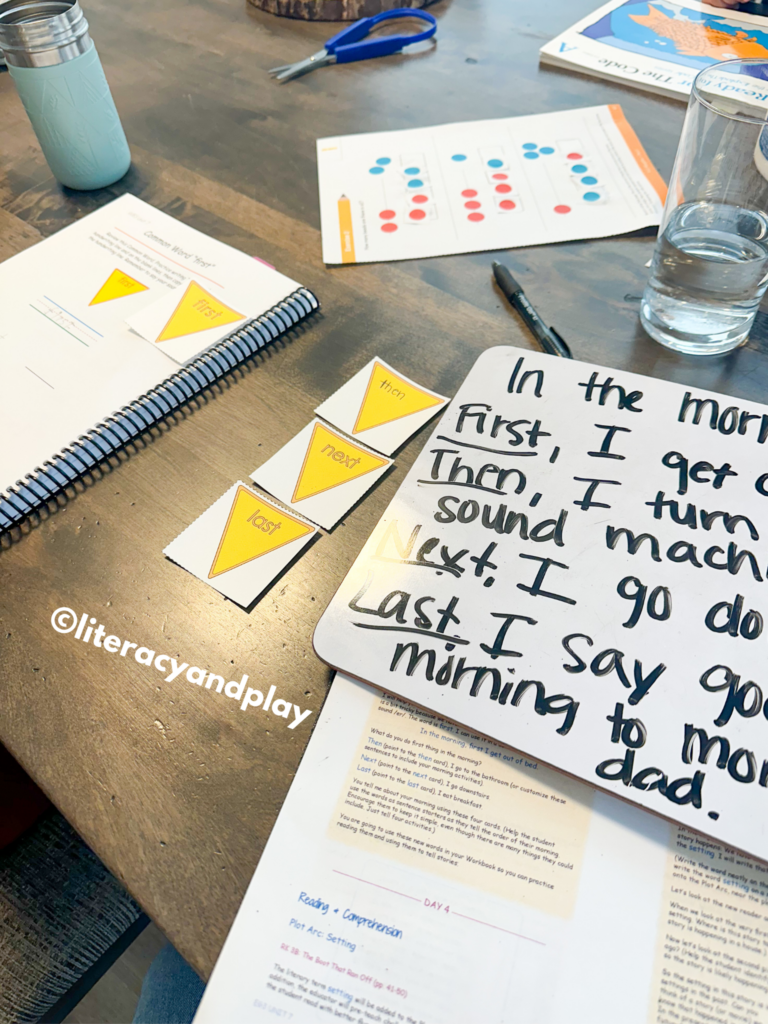
What Our First Grade School Day Looks Like
We homeschool year-round, and what you’re looking at is a sample of how our first-grade homeschool day typically looks throughout the year. That said, I do give us grace during the holidays and summer, we step back from the structured schedule and let things be a little looser and more relaxed during those seasons.
| MORNING |
| 7:00 – 7:30 AM Wake Up |
| 7:30 – 8:30 AM Independent Play or Morning Basket |
| 8:30 – 9:15 AM Breakfast |
| 9:15 – 10:00 AM Brush Teeth, Get Dressed, Chores |
| 10:00 – 11:15 AM Core Subjects |
| 11:15 AM – 12:00 PM Break |
| AFTERNOON |
| 12:00 – 12:45 PM Lunch |
| 12:45 – 2:00 PM Science, Art, or Geography |
| 2:00 – 3:00 PM Quiet Time |
| 3:00 – 4:00 PM Independent Play or Screen Time |
| 4:00 – 4:45 PM Dinner |
| 4:45 – 6:30 PM Outdoor Play or Independent Play |
| 6:30 – 7:00 PM Bath/Shower |
| 7:00 – 7:30 PM Independent Play and Read |
| 7:30/7:45 PM Bedtime |
Making Room for Co-ops and Extracurriculars in Your Homeschool Day
Many homeschool families choose to join a co-op that meets once a week, and also have their children involved in extracurricular activities they love. If that sounds like your family, my biggest piece of advice is to lighten the academic load on the days those activities fall. Don’t overbook your lesson days with activities, and don’t overload your activity days with lessons.
On the days my child has an afternoon activity, I focus only on getting our core subjects done and let the rest go. That’s it. No extras, no squeezing things in, just the essentials. It takes the pressure off both of us and means we show up to the activity without feeling frazzled or rushed. Homeschooling gives you the gift of flexibility, so use it.
Sick Days, Errands & Low-Motivation Days: How We Handle Them
When sickness hits our home, the schedule goes right out the window, and that is perfectly okay. Rest and recovery always come before lessons. If your child is under the weather, give yourself full permission to set the books aside and use that time for rest and recovery. And if you are the one who is sick. The same rule applies. Take the time off, rest, and come back to it when you feel like you have the energy to teach.
Low-motivation days are real, and they happen to every homeschool family, whether it’s the drag of a Monday after a full weekend or just one of those days where nobody feels like opening a book. On those days, we do the same thing: we simplify and focus on either both core subjects or one core subject. I know I’ve mentioned core subjects quite a bit throughout this post, and there’s a reason for that.
I genuinely believe that consistently showing up for language arts and math, even in small doses on the hard days, gives your child the foundation they need to grow into confident readers and strong math thinkers. That is not to say that science, geography, and the other electives are less important. They absolutely matter, and we love them. But on the days when motivation is low, life is busy, or everyone is just running on empty, prioritizing your core subjects means the most essential learning still gets done.
Everything else can wait for a better day, and that is not falling behind. That is just being a realistic and intentional homeschool parent.
Don’t lose this post! Save this pin to your homeschool Pinterest board and come back to it whenever you need it.
Final Thoughts
There is no such thing as a perfect first-grade homeschool schedule, and the sooner we let go of that idea, the more enjoyable the journey becomes. The perfect schedule is simply the one you create for your child, one that fits your family’s unique rhythm, personality, and season of life.
I hope this post has given you not just ideas, but the confidence and encouragement to sit down and build something that works beautifully for you. As you do, remember to keep it doable for your child and yourself. A schedule that looks impressive on paper but leaves everyone stressed and exhausted by noon is not serving anyone.
Set reasonable, realistic expectations for your first grader and for yourself as their teacher. When your schedule is built around your child’s needs, your family’s values, and flexibility, it is setting them up for a successful and fulfilling first-grade homeschool year.
Homeschool Planner Suggestions
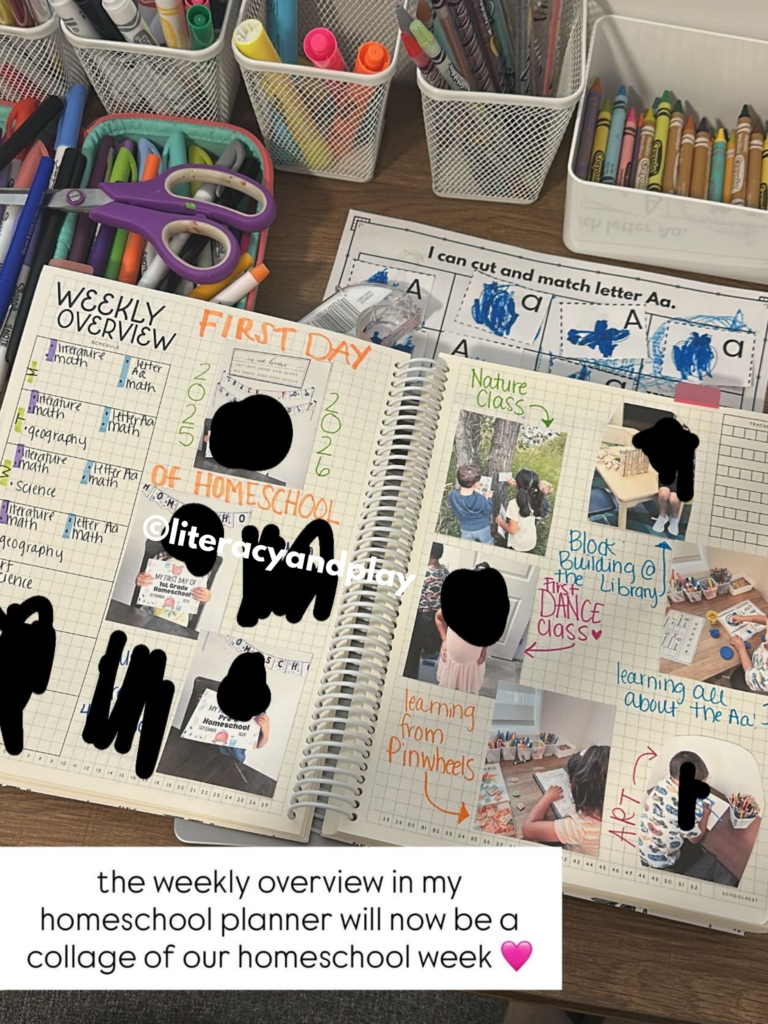
I have been using SchoolNest since we started our homeschool journey. What I love most about their planners is that they are completely blank and open-ended, giving you the freedom to plan in whatever way works best for you and your family.
- Homeschool Lesson Planning Minimalist Notebook (Nature Series): 12 Month, 52 Week Undated Planner by schoolnest
- Homeschool Lesson Planning Minimalist Notebook (Peach Paper Blooms Series): 12 Month, 52 Week Undated Planner by schoolnest
- Homeschool Lesson Planning Minimalist Notebook (Artist Series): 12 Month, 52 Week Undated Planner by schoolnest
- Homeschool Lesson Planning Notebook (Blue Paper Blooms Series): 12 Month, 52 Week Undated Planner by schoolnest
- Homeschool Lesson Planning Notebook (Artist Series): 12 Month, 52 Week Undated Planner by schoolnest