Pre-K is a grade level for children ages 4-5 who are developing a love of learning. This was my second time teaching Pre-K at home with my second child, so if you are looking for ideas, I have put together an honest review of the 2025-2026 Pre-K Homeschool Curriculum we used.
This site may contain affiliate links; view the disclosure for more information.
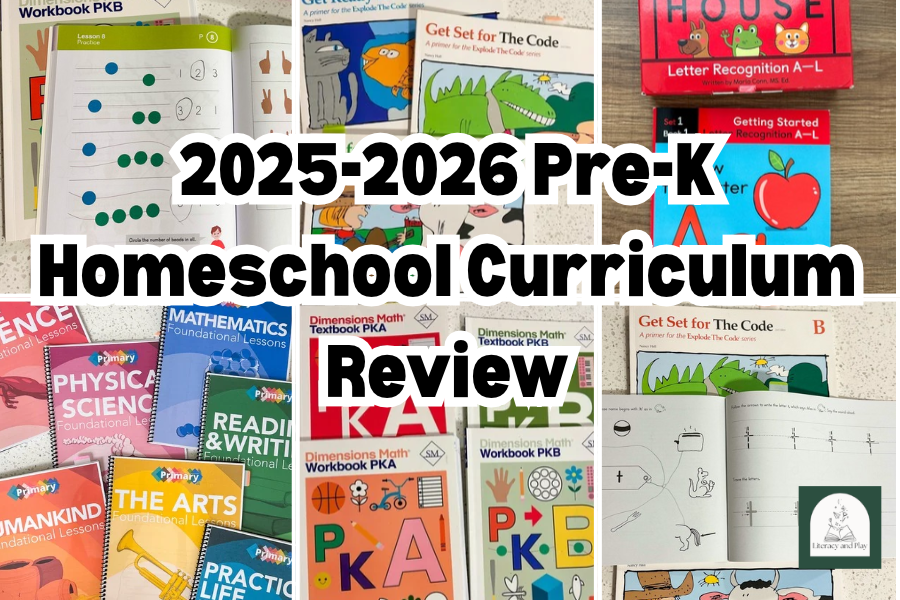
As I mentioned before, this is my second time homeschooling Pre-K. I think this age is really fun to teach because they are so curious and excited to learn. My unpopular opinion is that at this age, it’s best to focus on letters, numbers, and lots of learning through reading!
For electives such as geography/social studies, science, music, and art, I wasn’t concerned about buying a curriculum. I kept elective themes simple with books, documentaries, simple worksheets from TeachersPayTeachers, and crafts.
I believe that the early years of learning at home should be slow and intentional, without overwhelming our littles.
This blog post is all about the 2025-2026 Pre-K Homeschool Curriculum Review.
Post: [16 Must Have Preschool Homeschool Supplies]
Curriculum Overview at a Glance
*I am not affiliated with any curriculum companies.*
| Subject | Curriculum/Activities | Lesson Planning | Cost |
| Reading | Get Ready for the Code: Books A, B, and C The Reading House Set 1 The Reading House Set 2 Alphabet Play-Doh Mats | 30 min to an hour to gather materials and plan the week’s lessons. | Get Ready for the Code: Book A: $9 USD Book B: $9 USD Book C: $9 USD |
| Math | Singapore Dimensions Textbook PKA and Workbook PKB Textbook PKB and Workbook PKB | About 30 minutes to an hour of prep as a parent-teacher. To understand what you will be teaching and to gather hands-on materials for the lesson. | $ 123 USD with Teacher’s Guide |
| Electives: Science, Art, and Geography/Social Studies | Theme Books and Activities (ex: pumpkin life cycle, learning about North America, or strengthening cutting and gluing skills) | Plan for about an hour to two hours to choose a theme and gather materials. | Depends on how much you want to spend. TPT has different pricing. |
| ALL IN ONE Child of the Redwoods Montessori Curriculum | Reading and Writing Foundational Lessons, Mathematics Foundational Lessons, Physical Science, Arts, Life Science, and Humankind Foundational Lessons. | Plan for about an hour to two hours to choose the lessons and materials you need. | Enrollment Fee $150 + $588 Annually USD |
Deep Dive into the Curriculum
Reading
For reading, I wanted to keep it simple, so I essentially DIYed our reading curriculum. I know there are other Pre-K curriculum options that teach the letters and their sounds. Sharing what we did for parents who want something simple but focused on phonics.
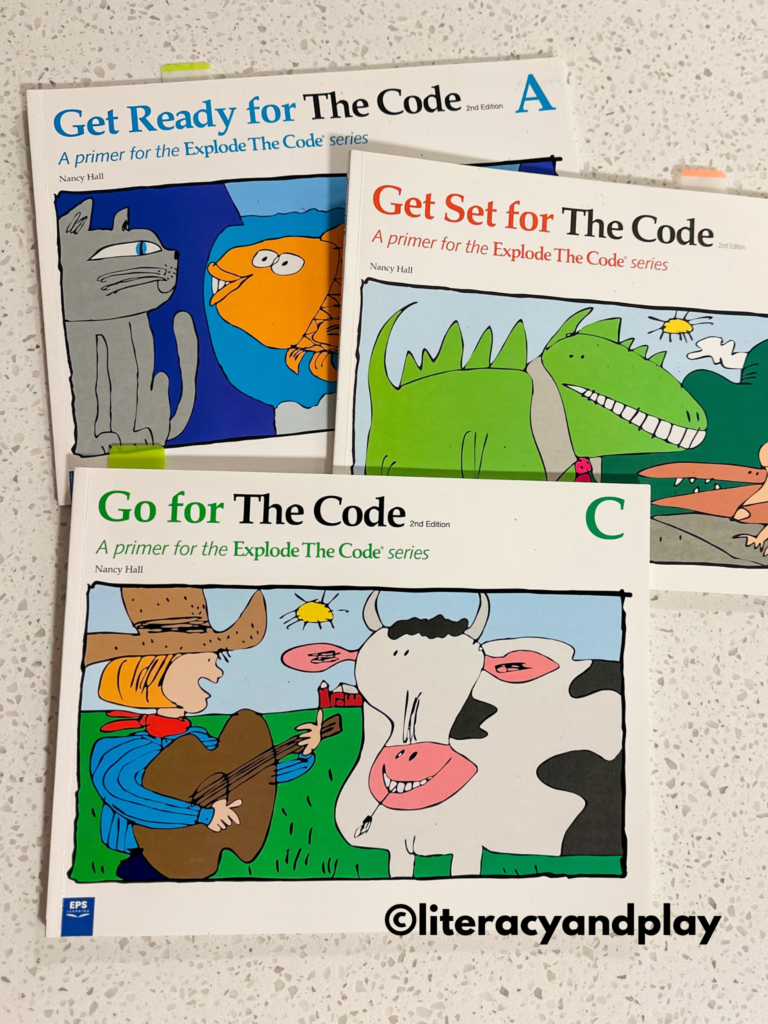
I chose Get Ready for the Code as a mini curriculum because I didn’t want to buy something big yet. My main goal for Pre-K reading was to introduce letters (uppercase and lowercase) and letter sounds. I wanted my child to build a strong foundation for Kindergarten, as they start sounding out three-letter words.
Pros of Get Ready for the Code:
- Simple lessons on the consonant letters: tracing, sound practice, writing practice, and coloring.
Cons of Get Ready for the Code:
- It doesn’t include learning the vowel letters; it focuses only on consonants.
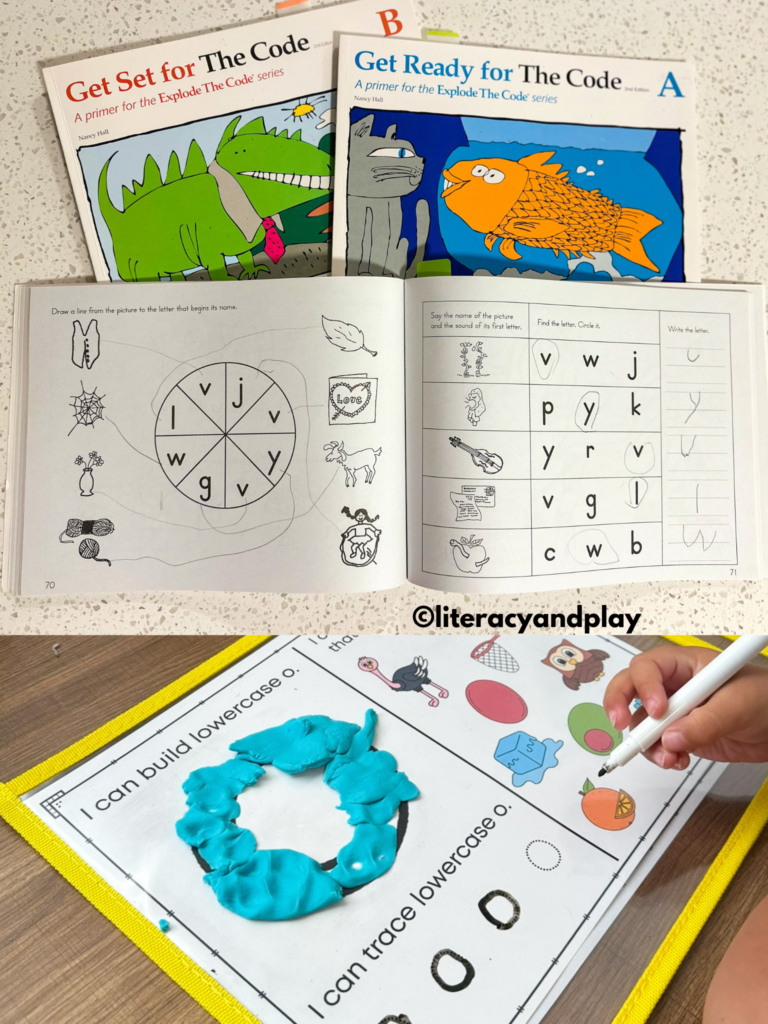
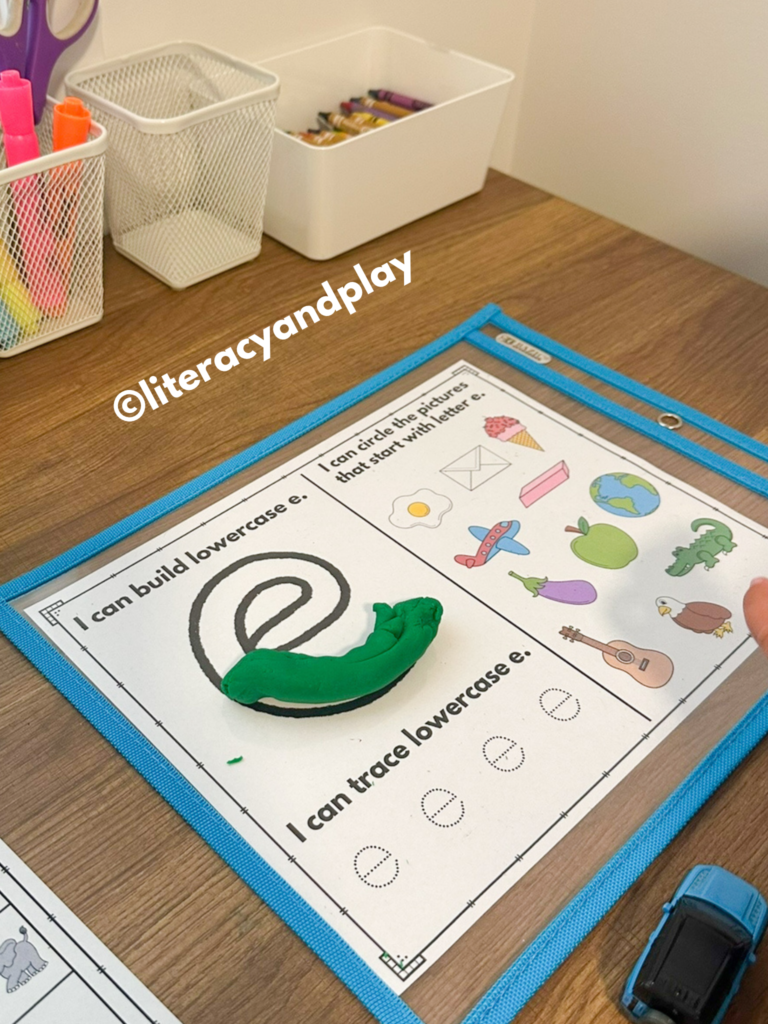
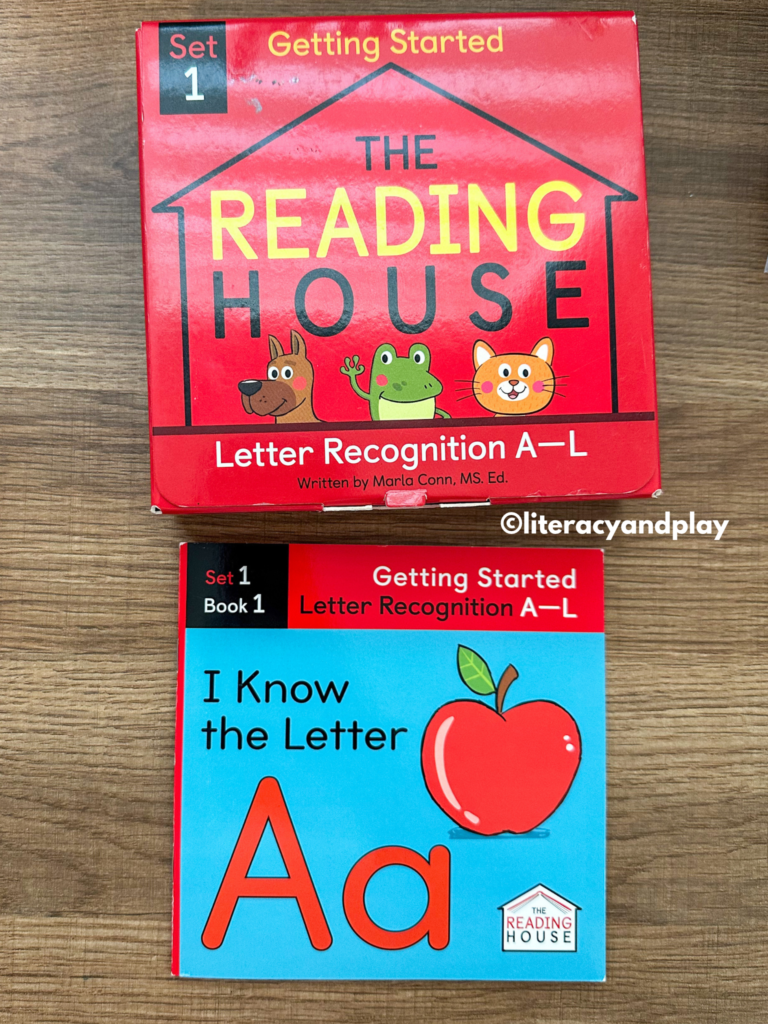
To support our mini curriculum, I purchased The Reading House Set 1 (letters A-L) and The Reading House Set 2 (M-Z). Each letter book includes a picture of the uppercase and lowercase letter and a mini story about things that start with it.
Lastly, I paired hands-on learning activities with each letter, such as alphabet play-doh mats, color-by-code alphabet sheets, build-the-letter crafts, or reading about things that start with that letter. For example, reading a book about apples for Aa or books about fish for Ff.
Check out:
- Get Ready for the Code Book A
- Get Ready for the Code Book B
- Get Ready for the Code Book C
- The Reading House Set 1
- The Reading House Set 2
Math
For math, I wanted my child to understand numbers 1-20. To keep it simple, I also didn’t want to keep doing repetitive “busy work” to learn numbers 1-20. I purchased Singapore Dimensions PKA and PKB to help my child build math skills.
I believe Singapore Dimensions PKA and PKB starts gently and isn’t overwhelming. The curriculum mainly focuses on numbers 1-10, colors, position, shapes, and comparing.
Pros of Singapore Dimensions PKA and PKB:
- Your child learns not only numbers but also shapes, colors, comparisons, patterns, and more.
Cons of Singapore Dimensions PKA and PKB:
- It is worksheet-based, but you can implement hands-on activities based on the lesson.
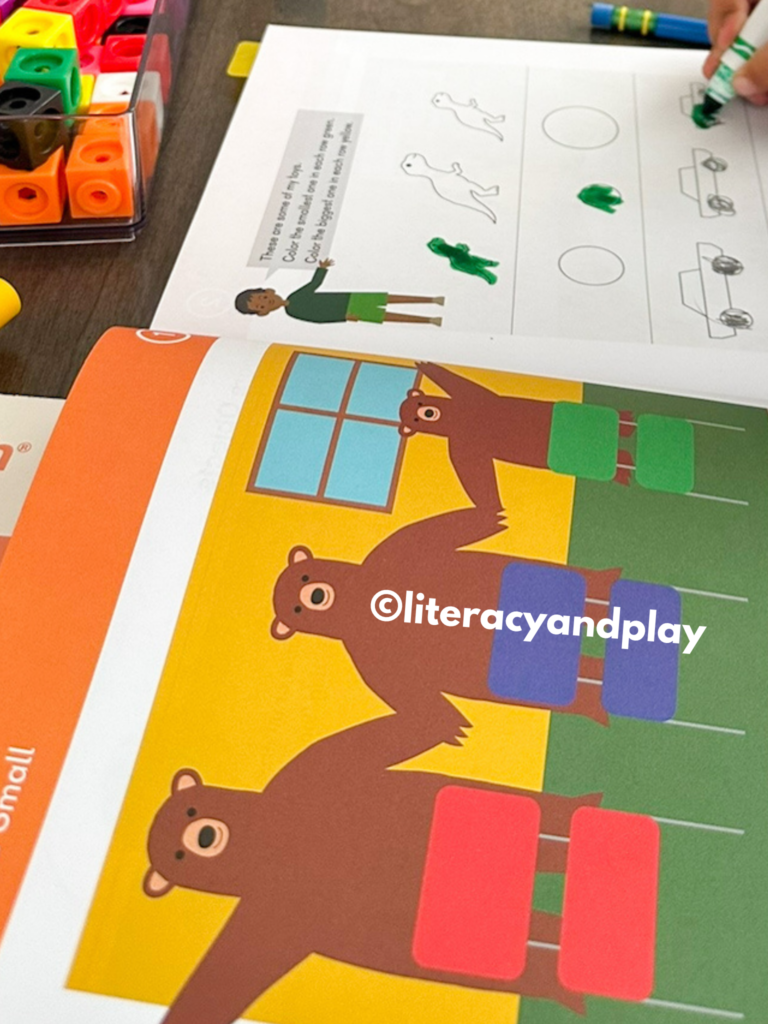
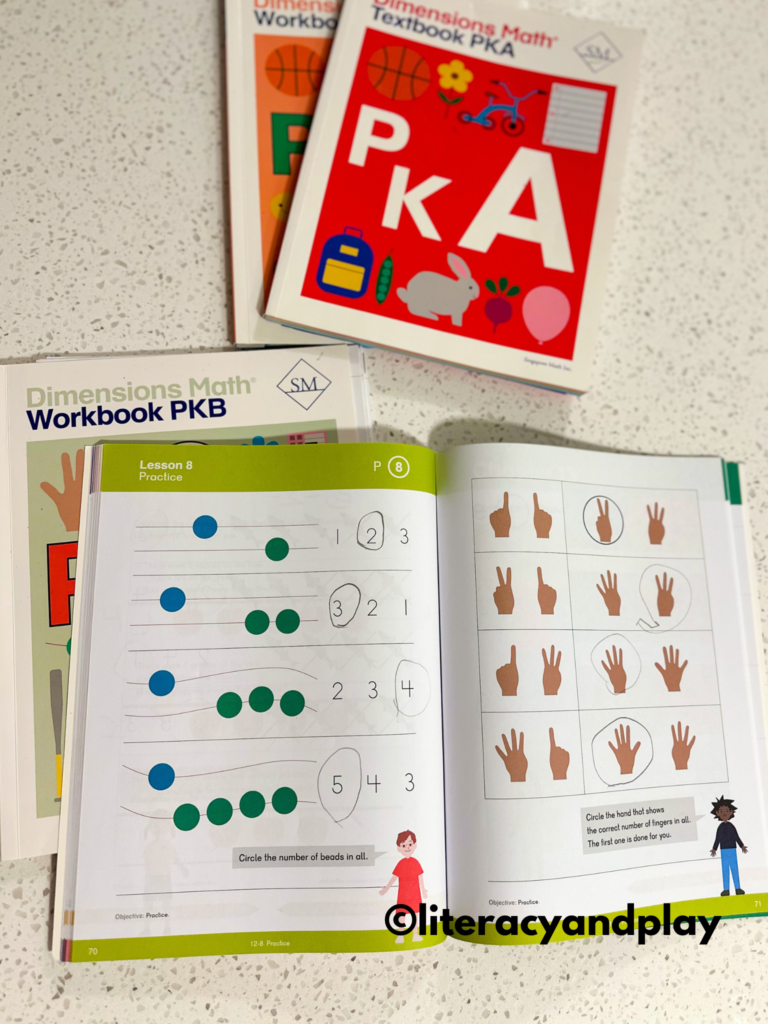
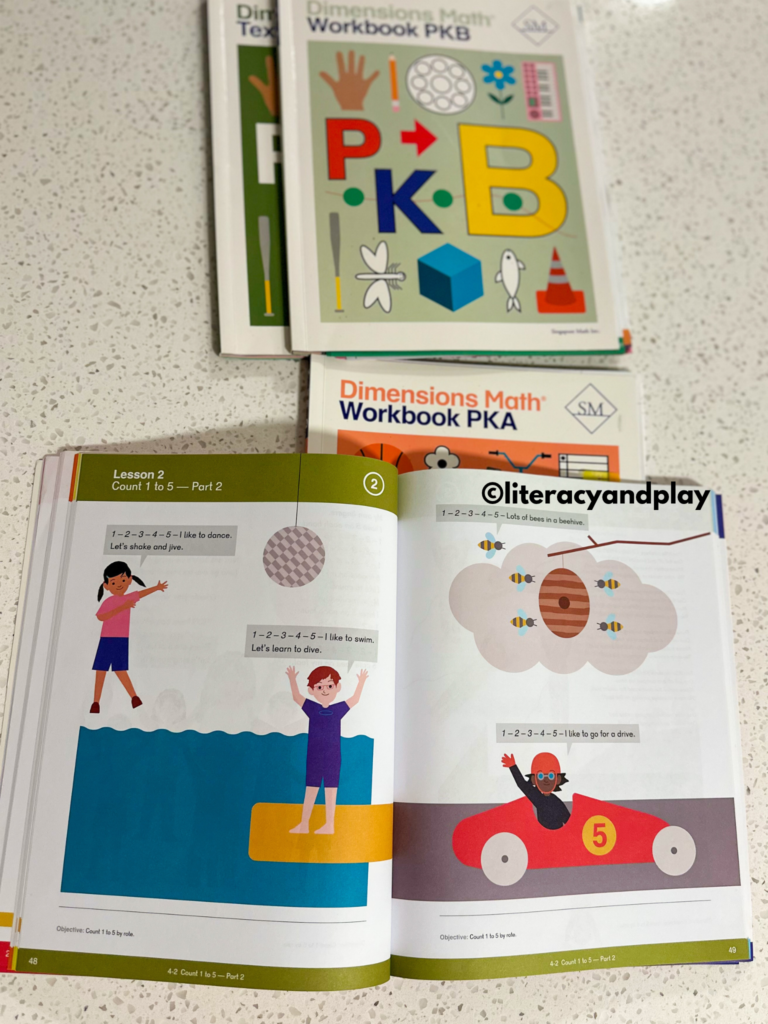
Overall, it is a simple curriculum. In my opinion, for PKA and PKB, you can get away with not spending extra money and purchasing the Teacher’s Guides. If you want more lesson ideas and are willing to spend extra money, I recommend purchasing the full bundle with the Teacher’s Guide.
Other activities you can pair with this, or use if you decide not to purchase this curriculum, can be activity packs such as Play-Doh mats or simple math unit study packs from TeachersPayTeachers.
Check it out: Dimensions Math Grade PK Set with Teacher’s Guides
Electives: Science, Social Studies/Geography, Art, and Music
For electives, you can keep it simple by reading books with your child about a topic/theme. This can range from looking up monthly theme activities and focusing on books and crafts.
For example, Fall Season (September – November), you can make it thematic:
- Science :
- Books and Crafts for September:
- Apply Life Cycle
- Oak Tree Life Cycle
- Books and Crafts for October:
- Pumpkin Life Cycle
- All About Bats
- Books and Crafts for November:
- Turkey Life Cycle
- Animal Habitats
- Books and Crafts for September:
- Geography/Social Studies:
- Books and Crafts for September:
- All About My Family and Me
- Books and Crafts for October:
- About the United States or the country you live in
- Books and Crafts for November:
- Continent where you live
- Books and Crafts for September:
For music and art, you can incorporate them into the theme you are teaching your child.
Montessori Curriculum – All in ONE
I consider our homeschool learning style eclectic. Eclectic incorporates a little of every learning style into my child’s learning style, such as sit-down book work, learning through books, and hands-on learning. Alongside the curriculum and activities I mentioned, I also used an all-in-one Montessori-style curriculum to supplement and get more ideas for incorporating hands-on learning, not just workbook-style.
I truly enjoy the Montessori Learning Style for the early years and mainly focused on reading and math activities, using the elective lessons lightly.
Pros of Child of the Redwoods Curriculum:
- All-in-one curriculum
- Individualized Pacing: You choose the theme/topic to teach your child
- It gives you clear steps if you are just beginning your Montessori learning with your child, and videos on how to teach the Montessori Lessons
- Encourages hands-on learning
Cons of Child of the Redwoods Curriculum:
- It takes a lot of planning and prep work
- May require you to purchase additional materials from what is provided in the curriculum (ex: purchase extra learning printables or hands-on materials)
- You either pay up front or pay a subscription cost
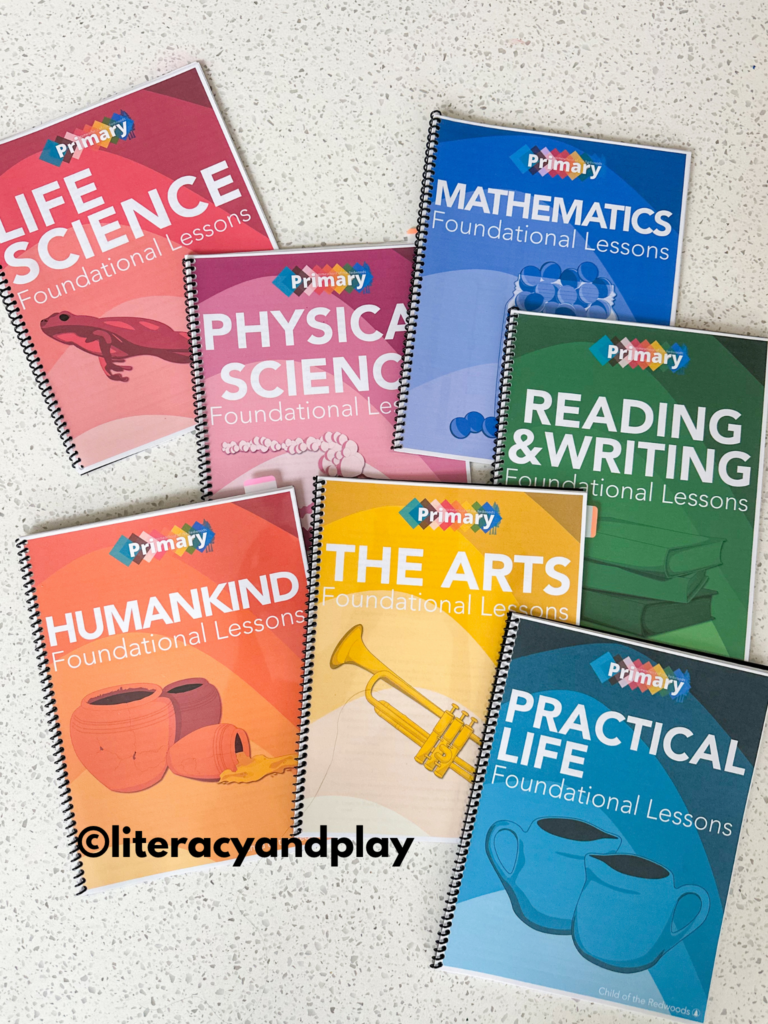
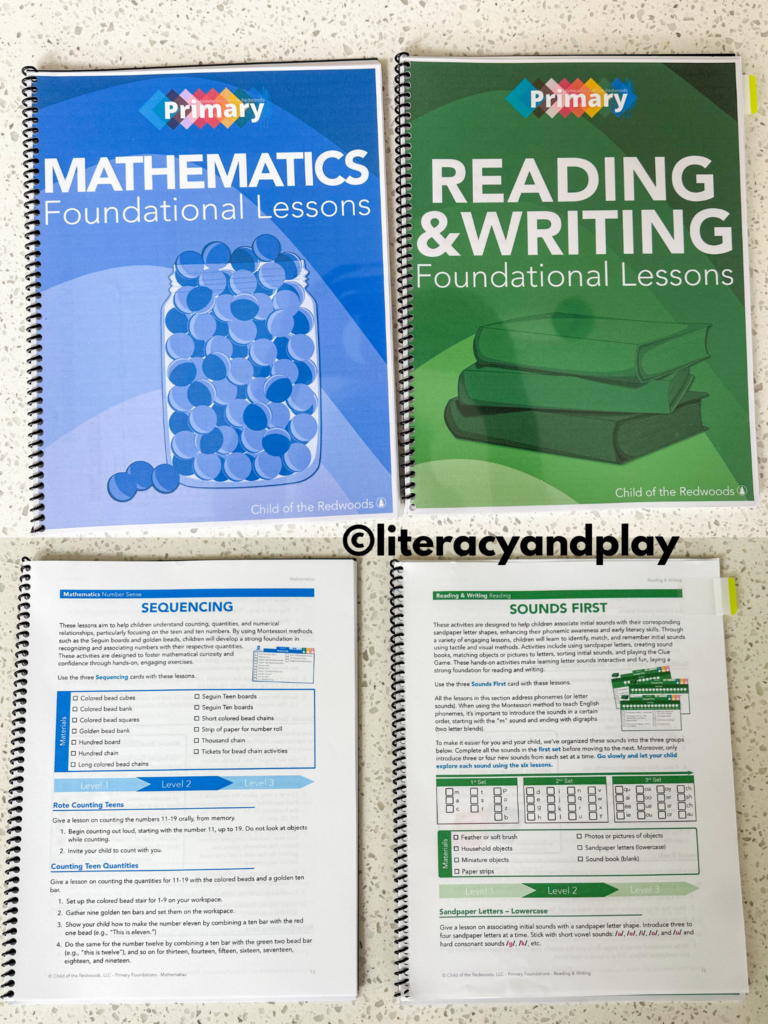
Last thoughts on this Montessori Curriculum: If you purchase the Primary Montessori Curriculum, you can still use it for Kindergarten and possibly 1st grade depending on your child’s learning progress. It has a high upfront cost, but it’s an investment if you choose the Montessori Learning Style.
Check out: Child of the Redwoods.
Related Post: [Preschool Homeschool Tips]
Final Thoughts
Hopefully, these recommendations have encouraged you to keep your child’s early learning years simple. I enjoy researching curriculum and learning what works and what doesn’t. But I also believe Pre-K at home is the year we lay a strong foundation for our children’s learning. They are still at an age where their attention span is short, but they want to work with their hands and listen to Mom read.
Remember to choose a curriculum that best fits your child’s learning style and your family’s style.